


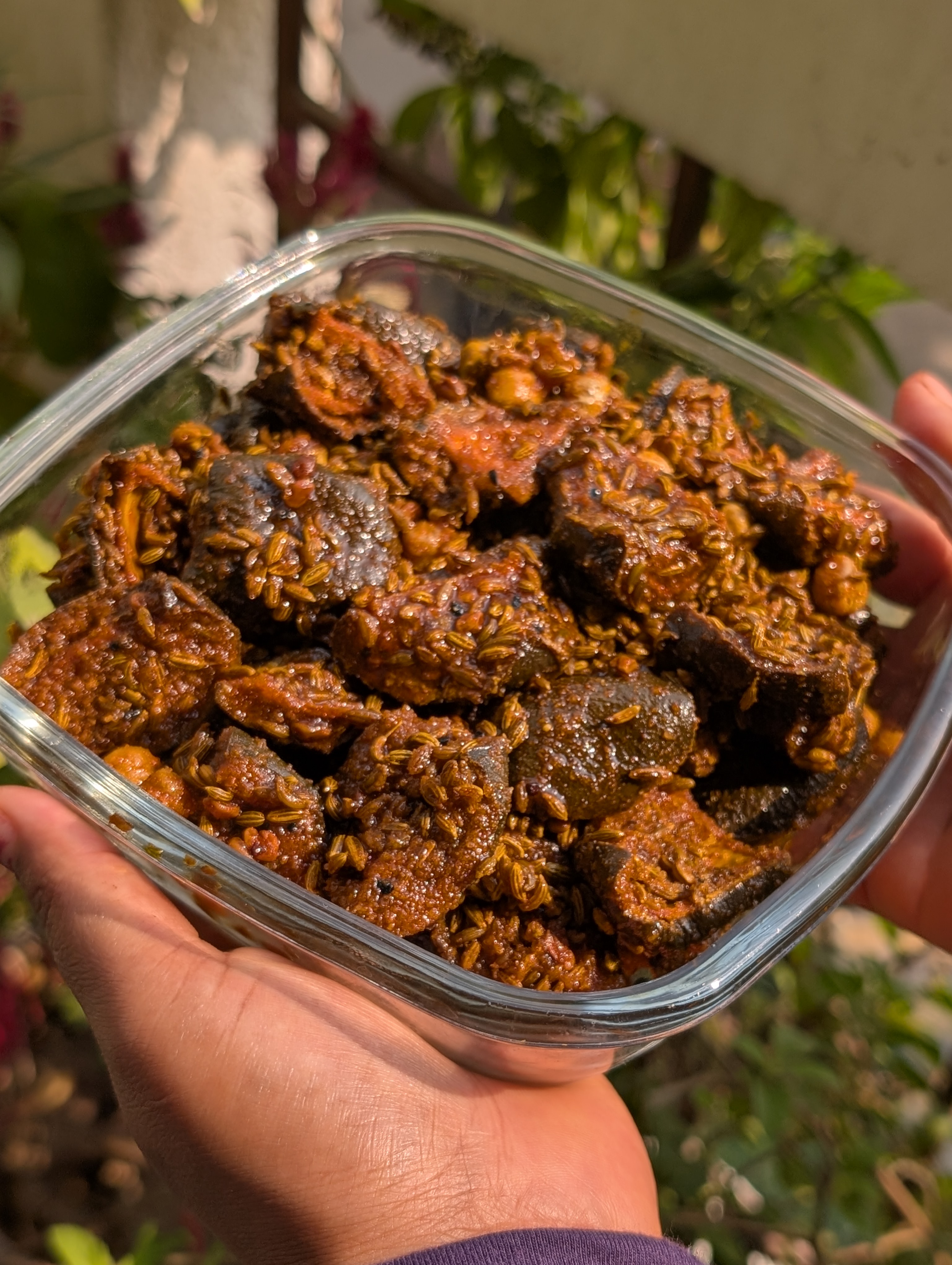
by – Kanta Kumar
Ma was always very fond of making achars. Summers in our house meant aam ka achar and aam ki chutney. When winter arrived, it was time for nimbu ka achar and khatta-meetha vegetable ka achar.
Our house always had a wonderful collection of homemade pickles, and there was rarely a time when we ran out of them.
I remember telling Ma one summer, “Let’s learn how you make these achars. Otherwise, one day we won’t even know how to make them ourselves!”
And so, we decided to make it a family activity. My sister, my sister-in-law and I got together with Ma, and we made the achars together.
It was such a beautiful time. There was so much to do, so much to learn, and so much to enjoy as we prepared everything together.
Little did we know that we wouldn’t get another opportunity to learn how to make all the other achars from Ma. She passed away in August.
Looking back, I am so glad we made that effort to learn and document these recipes when we did.
That is, in many ways, what this blog is all about. Holding on to the recipes, the memories and the people behind them. Some moments may never come back, and some opportunities may never come again, but through these recipes, we can preserve a little piece of them.
It’s about sharing our love for food, family and heirloom recipes, and giving others an opportunity to relive their own memories through the food they grew up with.
This aam ka achar will always remind me of that beautiful time spent making pickles with Ma.
Ma’s Special Aam Ka Achar
Recipe by Kanta Kumar
A traditional homemade raw mango pickle made with saunf, methi, red chilli powder and mustard oil. The mangoes are coated generously with the spices and oil and then left to cure in the sun over the following days.
Ingredients
- 5 kg raw mangoes (kaccha aam), cut into small pieces
- 500 g saunf (fennel seeds)
- 100 g methi dana (fenugreek seeds)
- 250 g good-quality red chilli powder (lal mirch)
- 700 g salt
- 1 tbsp haldi (turmeric powder)
- 1.25 kg mustard oil (sarson ka tel), with extra if required
Method
Preparing the mangoes
- Wash the raw mangoes thoroughly and dry them completely before cutting.
- Cut the mangoes into small pieces and spread them out to ensure that there is no surface moisture left on them.
Preparing the masala
- In a large, clean and completely dry bowl, combine the saunf, methi dana, red chilli powder, salt and haldi. Mix all the ingredients well.
- Add a portion of the mustard oil to the spice mixture and mix thoroughly.
- Add the mango pieces to the bowl. Using your hands, rub the masala and oil generously over the mango pieces, ensuring that every piece is thoroughly coated.
Filling the jars
- Transfer the masala-coated mango pieces into clean, sterilised and completely dry glass jars. Pack them well, leaving a little space at the top.
- Keep the remaining mustard oil aside for topping up the jars as required.
- Close the jars securely.
Sun-curing the achar
- Place the jars in the sun during the day. Bring them indoors every evening and keep them in a dry, sheltered place, away from rain and moisture.
- Over the next couple of days, you will notice that the level of the pickle in the jars has come down. This happens as the mangoes release some of their natural moisture and settle.
- Add the reserved mustard oil as required to ensure that the mango pieces remain completely covered. If the reserved oil is not sufficient, add some more.
- Continue placing the jars in the sun during the day and bringing them indoors every evening. Give the pickle time for the masalas to come together and the mango pieces to soften.
Once the mango pieces have softened and the flavours have come together, the aam ka achar is ready.
Ma’s Kitchen Notes
- Use good-quality spices. Fresh, good-quality spices make a world of difference to the aroma and flavour of the achar.
- Pay special attention to the lal mirch powder. Its quality, freshness, colour and flavour are particularly important in this recipe.
- Use good-quality mustard oil (sarson ka tel), which gives the achar its characteristic flavour.
- Make sure the mango pieces, utensils and storage jars are completely free of surface moisture.
- Keep some mustard oil aside for topping up the jars during the curing process. The mangoes release their natural moisture as they settle, and additional oil may be needed to keep them covered.
- Always use a clean, completely dry spoon when handling the pickle.
A little reminder: Making achar is almost like looking after something precious. The jars need attention every day – out in the sun during the day and safely indoors every evening!


Leave a Reply